
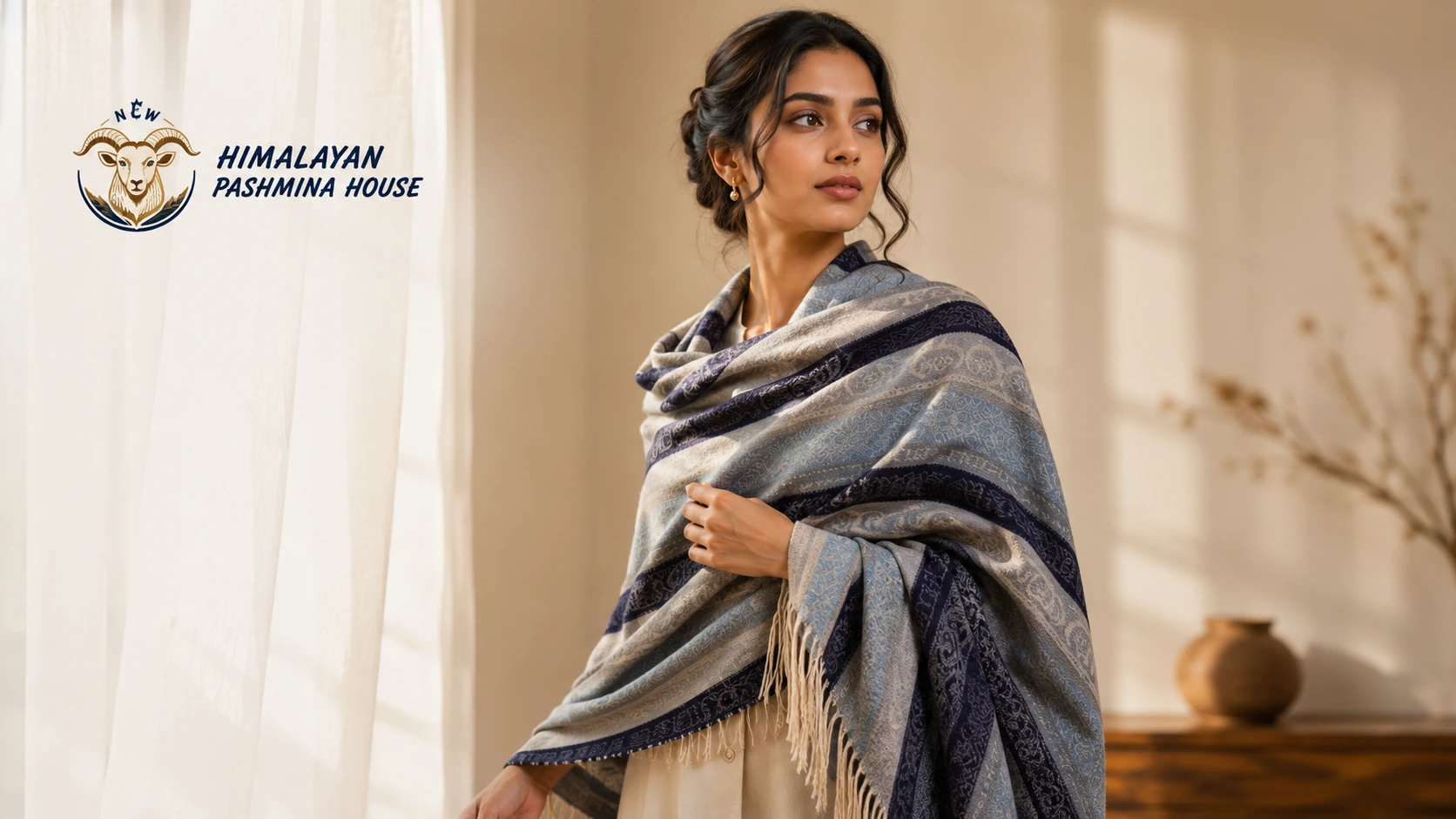
✨ Love what you're reading? Shop authentic Himalayan pashmina.
Shop Our Collection →📖 In This Complete Guide
- What Is Authentic Pashmina?
- The 2,500-Year History
- The Chyangra Goat
- Why Nepal Is Famous
- Goat to Garment Process
- Cashmere vs Pashmina
- Authentic vs Synthetic
- Why It's a Luxury Fibre
- Can You Wear It in Summer?
- Perfect for Canadian Winters
- Health Benefits
- How to Identify Authentic
- Care Guide
- Styling Every Season
- 15 FAQs Answered
✨ Key Takeaways From This Guide
- ✅ Authentic pashmina = 12–16 micron Chyangra cashmere from 4,000m+ altitude in Nepal
- ✅ One goat yields only 80–170g of fibre per year — one shawl needs 2–3 goats
- ✅ Every handwoven shawl takes a master artisan 3–5 full days to complete
- ✅ Yes — genuine pashmina is naturally breathable and works beautifully in summer
- ✅ With proper care, authentic pashmina lasts 20–30 years (and grows softer)
- ✅ You can identify a fake in 30 seconds with the feel test, burn test & price check
What Is Authentic Himalayan Pashmina?
Authentic Himalayan pashmina is a premium natural fibre derived from the soft undercoat of the Chyangra goat (Capra hircus laniger), a high-altitude animal native to the mountain regions of Nepal, Tibet, and the surrounding Himalayas.
The word “pashmina” comes from the Persian word pashm, meaning “soft gold” — a fitting name for a fibre that has been treasured by royalty, diplomats, and discerning buyers across five continents for over 2,500 years.
What makes authentic pashmina distinct from ordinary wool or even standard cashmere is its extraordinary fineness. The fibre diameter of genuine Himalayan pashmina measures between 12 and 16 microns — approximately one-sixth the diameter of a single human hair. This microscopic thinness is what gives pashmina its signature qualities:
- Exceptional softness that feels gentle against the most sensitive skin
- Lightweight warmth that insulates without weight or bulk
- Natural breathability that regulates body temperature in all seasons
- Long-lasting durability — authentic pashmina actually grows softer with every wear
That's all one Chyangra goat produces per year — less than a small cup of coffee.
One pashmina shawl requires the annual yield of two to three goats.
The History of Authentic Himalayan Pashmina
Ancient Origins
The history of pashmina stretches back over two millennia. Archaeological evidence suggests that fine cashmere-type textiles were being produced in the Kashmir Valley and surrounding Himalayan regions as early as the 3rd century BCE.
Ancient trade records reference soft woollen shawls from the high-altitude regions of Central Asia being carried along the Silk Road — prized not only for their warmth but for their extraordinary fineness and the prestige they conferred upon their owners.
The Mughal Era and the Rise of Kani Weaving
The 15th and 16th centuries marked a golden era for pashmina craftsmanship. Emperor Akbar of the Mughal Empire (1556–1605) is widely credited with popularising the royal pashmina shawl across South Asia. The imperial court commissioned elaborately patterned shawls woven with intricate floral and geometric designs — a technique known today as Kani weaving.
Empress Joséphine of France, wife of Napoleon Bonaparte, is said to have owned hundreds of pashmina shawls — and is credited with making them fashionable across European high society in the 18th century. The legendary “ring shawl” — a pashmina so fine it could pass through a finger ring — became the ultimate test of authenticity.
Nepal's Rise as the Centre of Pashmina Excellence
While Kashmir has a long pashmina tradition, Nepal emerged over the 20th century as the world's leading centre for pashmina production, export, and innovation. The Kathmandu Valley — home to generations of master weavers — developed a globally recognised reputation for producing pashmina of outstanding quality, ethical standards, and artistic richness.
Today, pashmina is one of Nepal's most important export industries, connecting Himalayan artisans directly with buyers in Canada, the USA, Europe, Japan, and the Middle East.
The Himalayan Origin of Chyangra Cashmere
What Is the Chyangra Goat?
The Chyangra goat (known in Nepal as Chyangra or Changra) is a hardy, sure-footed mountain animal that lives at altitudes of 4,000 metres (13,000 feet) and above — primarily across the Mustang, Dolpa, and Humla districts of northern Nepal, as well as neighbouring regions of Tibet and Ladakh.
Winter temperatures in the Chyangra goat's habitat.
It is this extreme cold that forces the goat to develop the world's finest natural insulating fibre.
Why Altitude Matters
The high altitude is not incidental to pashmina quality — it is the defining factor. The combination of extreme cold, low oxygen levels, sparse mineral-rich vegetation, and clean Himalayan air produces a cashmere fibre of fineness, length, and tensile strength that simply cannot be replicated by goats raised at lower altitudes.
Authentic Chyangra cashmere from Nepal and Tibet is universally regarded as the finest natural fibre in the world.— New Himalayan Pashmina House
Why Nepal Is Famous for Pashmina
Nepal's reputation for world-class pashmina rests on five key pillars:
1. Access to the finest raw fibre. Nepal borders the Tibetan Plateau — the primary habitat of the Chyangra goat. Nepalese artisans have direct, traditional access to the purest raw pashmina fibre.
2. Centuries of craft knowledge. Pashmina weaving has been practised in the Kathmandu Valley for generations. Craft knowledge is passed down within families and weaving communities, creating an unbroken chain of expertise.
3. Government quality standards. The Government of Nepal, through the Nepal Pashmina Industries Association (NPIA), has established strict grading and certification standards to protect the authenticity and global reputation of Nepalese pashmina.
4. Ethical and sustainable production. The Chyangra goat is never harmed during fibre collection. Herders comb the natural undercoat from the animal during spring moulting — a process that is entirely humane and sustainable.
5. Artistic richness. Nepal's pashmina artisans produce a remarkable range of styles — from plain and solid-colour shawls to intricate hand-embroidered pieces, reversible designs, and contemporary fashion-forward wraps.
Traditional Nepalese Craftsmanship: The Journey from Goat to Garment
The creation of an authentic Himalayan pashmina involves more human hours than most luxury goods sold anywhere in the world. Here is the full journey:
Step 1 — Spring Combing. Each spring, as the Chyangra goat naturally sheds its winter undercoat, herders in the high Himalayas gently comb the animals by hand. A single goat yields only 80–170 grams of raw fibre per year — one of the reasons authentic pashmina commands its price.
Step 2 — Raw Fibre Sorting. The combed fibre is carefully sorted by hand to separate the fine cashmere undercoat from coarser guard hairs. This painstaking process requires skill and experience honed over years.
Step 3 — Cleaning and De-hairing. The sorted fibre is washed in cold Himalayan water and passed through a de-hairing machine that removes any remaining coarse fibres.
Step 4 — Hand Spinning. In a tradition unchanged for centuries, Nepalese women — primarily in mountain villages — spin the pashmina fibre by hand onto wooden spindles called takli.
The time a master artisan spends hand-weaving a single pashmina shawl.
That is 24–40 hours of skilled human craft in every piece you wear.
Step 5 — Natural Dyeing. The spun yarn is dyed using carefully controlled processes. Many producers, including artisans who supply New Himalayan Pashmina House, prioritise low-impact, REACH-compliant dyes that meet European environmental standards.
Step 6 — Hand Weaving. The dyed yarn is set up on traditional wooden handlooms by master weavers. Weaving a single shawl (typically 200 cm × 70 cm) takes between three and five full working days.
Step 7 — Finishing. Once woven, the shawl is washed again to bloom the fibres, stretched on frames to ensure even dimensions, hand-inspected, and — where required — hand-fringed, embroidered, or decorated with traditional motifs.
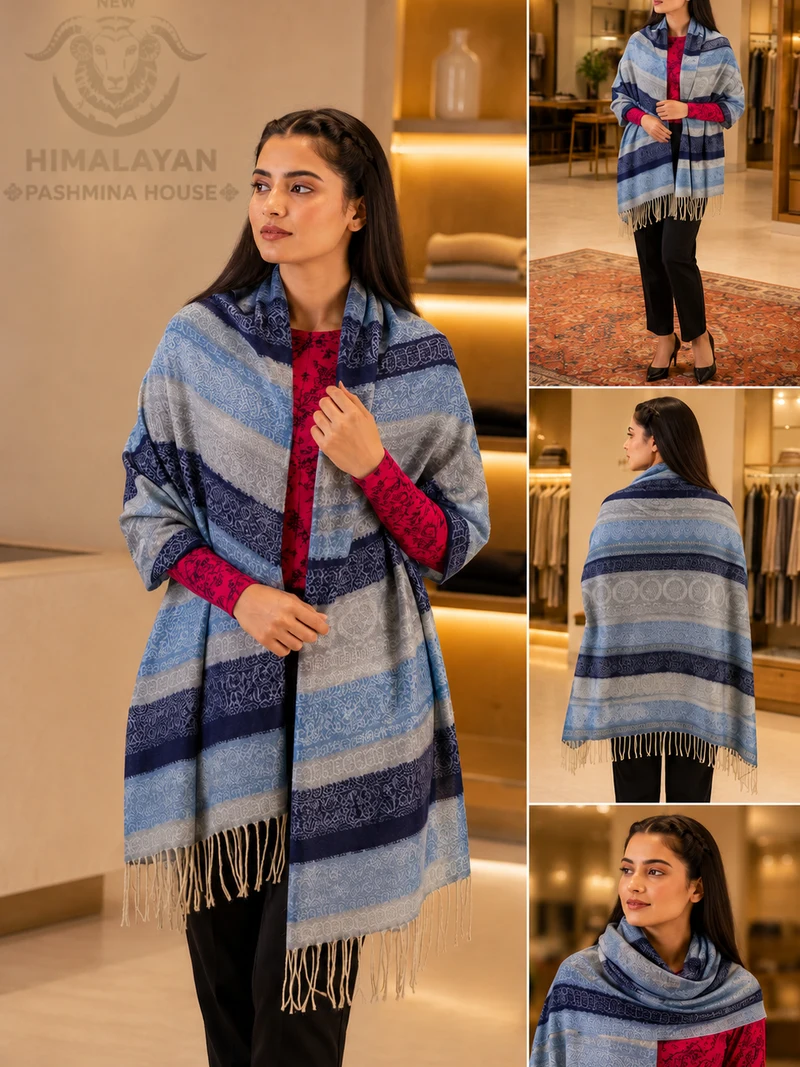
Pashmina Stole – Woven Pattern Collection | Handwoven Nepal
Ready to experience the difference? Browse our full range of authentic pashmina shawls — each handwoven in Nepal from genuine Chyangra cashmere fibre.
Cashmere vs Pashmina: Understanding the Difference
One of the most common questions we receive is: What is the difference between cashmere and pashmina?
| Feature | Standard Cashmere | Authentic Pashmina |
|---|---|---|
| Source Animal | Various cashmere goat breeds worldwide | Chyangra goat, Himalayas |
| Fibre Diameter | 15–19 microns | 12–16 microns |
| Altitude of Origin | Variable (often lowland) | 4,000m+ above sea level |
| Softness | Very soft | Exceptionally soft |
| Weight | Light | Ultra-lightweight |
| Warmth | High | Superior |
| Price | Moderate to high | Premium to luxury |
| Production | Often machine-processed | Traditionally hand-processed |
| Origin Certification | Variable | Nepal Pashmina Association |
All pashmina is cashmere — but not all cashmere is pashmina.— The most important distinction in luxury textiles
Explore our collection of genuine Himalayan cashmere shawls — sourced directly from artisan weavers in Nepal and certified authentic.
Authentic vs Synthetic: A Critical Comparison
The pashmina market is unfortunately flooded with synthetic imitations. Here is how to distinguish authentic pashmina from lower-quality alternatives:
| Feature | Authentic Pashmina | Synthetic / Fake Pashmina |
|---|---|---|
| Material | Pure Chyangra cashmere fibre | Viscose, acrylic, or blended polyester |
| Feel | Naturally warm, cloud-soft | Often slippery, cool to touch |
| Weight | Feather-light | Often heavier |
| Warmth | Exceptional natural insulation | Minimal thermal properties |
| Breathability | Naturally breathable | Traps heat, can cause discomfort |
| Pilling | Minor pilling initially (sign of genuine cashmere) | Excessive, persistent pilling |
| Burn test | Burns slowly, smells like burnt hair, leaves ash | Burns quickly, smells like plastic |
| Certification | Nepal Pashmina Association label | No verifiable certification |
| Price | Reflects true craftsmanship | Unusually low |
| Longevity | Decades with proper care | Deteriorates within months |
Why Authentic Pashmina Is Considered a Luxury Fibre
Scarcity of raw fibre. A single Chyangra goat produces less than 200 grams of usable fibre per year. A standard pashmina shawl requires the annual yield of approximately two to three goats.
Irreplaceable human skill. The hand spinning, hand weaving, and hand finishing of authentic pashmina cannot be meaningfully replicated by machines without sacrificing quality. Every piece carries the investment of skilled human artistry.
Extreme geography. The high-altitude regions where Chyangra goats graze are remote, difficult to access, and inherently limited in scale. The pashmina supply cannot be industrially expanded.
Generational craft knowledge. The techniques used to create authentic Himalayan pashmina were developed over centuries. They cannot be learned quickly or transferred easily — they are embodied in the hands and instincts of Nepalese artisan families.
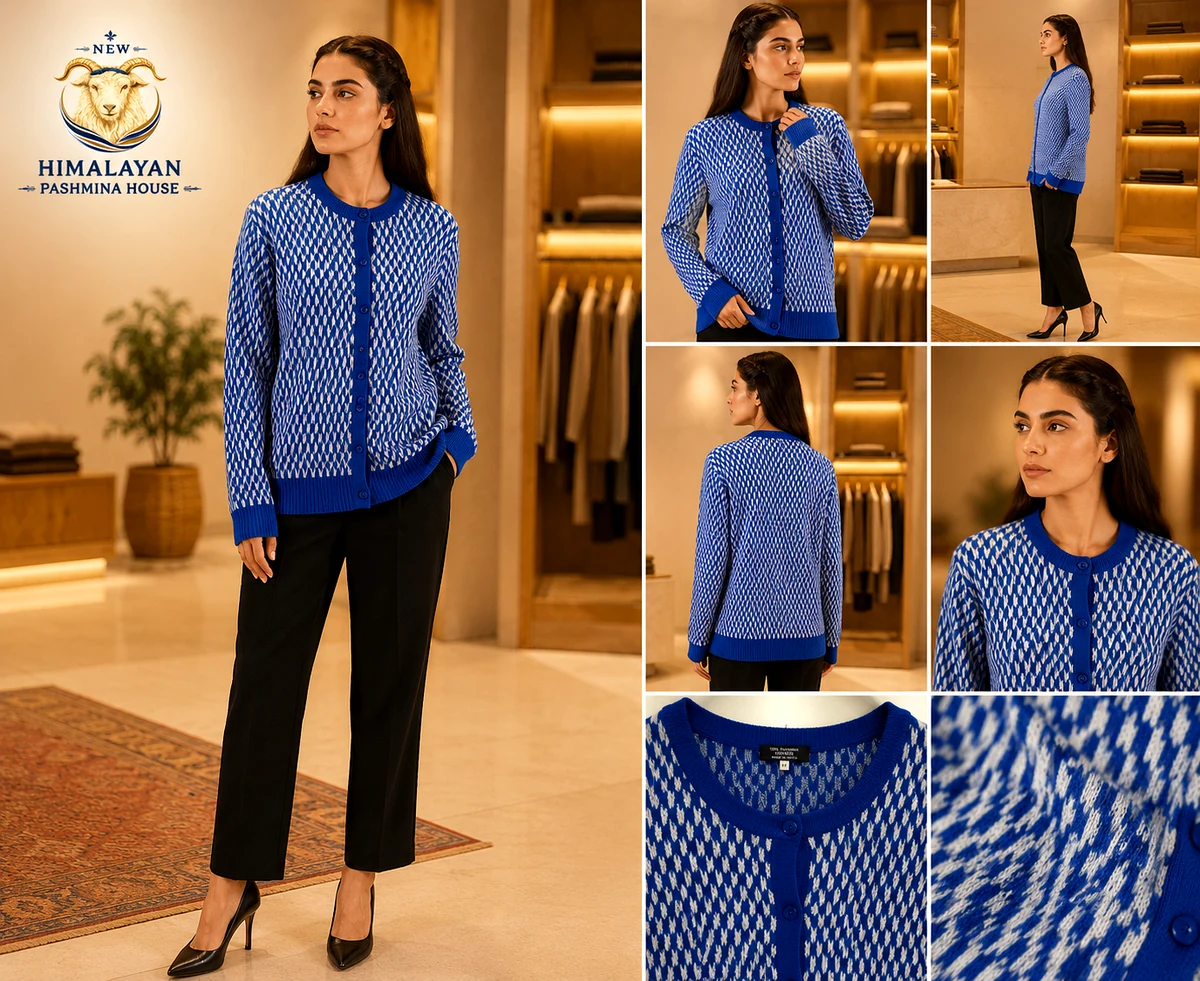
Women's Himalayan Cashmere Sweater – Luxury Soft Knit Pullover
Can You Wear Pashmina in Summer?
This is one of the most frequently asked questions about pashmina — and the answer may surprise many people.
Authentic Himalayan pashmina's hollow, crimped fibre structure traps warm air in cold weather and allows moisture vapour to escape in warm weather — making it one of the only natural fibres that genuinely performs in all four seasons.
| Feature | Summer Use | Winter Use |
|---|---|---|
| Breathability | ✅ Exceptional | ✅ Good |
| Warmth | ⚪ Light layering warmth | ✅ Exceptional |
| Moisture management | ✅ Wicks moisture naturally | ✅ Keeps damp away |
| UV protection | ✅ Natural fibre provides mild protection | ✅ Adds wind protection |
| Style versatility | ✅ Elegant evening wrap | ✅ Essential cold-weather layer |
| Weight | ✅ Feather-light, non-restrictive | ✅ Warm without heaviness |
| Hypoallergenic | ✅ Comfortable on bare skin | ✅ Non-irritating |
Why Pashmina Is Perfect for Canadian Winters
Canada's climate presents a particular challenge for natural fibre lovers. Winters in Toronto, Calgary, Vancouver, and Ottawa are demanding — yet most synthetic winter layers sacrifice breathability for warmth, leading to discomfort during transitions between outdoor cold and indoor heat.
Authentic Himalayan pashmina solves this problem elegantly. A pashmina wrap or shawl worn over a business outfit is:
- Warmer than a scarf and more versatile
- Lighter than a blanket wrap but more insulating
- More stylish than fleece and more timeless than most synthetic options
- Packable and travel-friendly — folds to the size of a paperback book
“I bought this shawl for a trip to Montreal in January. It was the only thing I needed. The quality is extraordinary — nothing like the 'pashminas' I'd bought before at malls. This is the real thing, and I can absolutely feel the difference.”
Health and Comfort Benefits of Pashmina
Hypoallergenic. Pashmina's fine fibre diameter means it does not cause the itching or skin irritation associated with coarser wools. It is suitable for people with sensitive skin, eczema, or wool sensitivity.
Naturally antimicrobial. Cashmere fibre has natural properties that inhibit the growth of odour-causing bacteria — meaning your pashmina stays fresher for longer between washes.
Non-static. Unlike synthetic fabrics, pashmina does not generate static electricity — important for comfort and for preserving clothing worn underneath.
Pashmina can absorb up to 30% of its own weight in moisture before feeling damp.
This keeps skin dry and comfortable all day — something no synthetic fabric can match.
How to Identify Authentic Himalayan Pashmina: 5 Proven Tests
With so many synthetic imitations on the market, knowing how to verify authenticity is essential:
1. The Feel Test. Authentic pashmina feels cloud-soft and warm against your palm. It does not feel cool, slippery, or plastic-like.
2. The Ring Test. A genuine fine pashmina shawl can be drawn through a finger ring. While this is not definitive for all weights, it is a useful guide for fine-weave pieces.
3. The Burn Test. A single thread of genuine pashmina will burn slowly, smell like singed hair (not plastic), and leave a fine, crushable ash.
4. Certification Labels. Look for the Chyangra Pashmina trademark or certification from the Nepal Pashmina Industries Association (NPIA) — a government-backed quality guarantee.
5. The Price Reality. A genuine handwoven pashmina shawl requires significant skilled labour and rare raw material. If the price seems too low to be true, it almost certainly is.
Once you know how to identify genuine pashmina, explore our curated cashmere sweaters and full collections — all verified authentic and ethically sourced from Nepal.
How to Care for Your Pashmina
🧺 Pashmina Care Quick Guide
- ✅ Wash: Hand wash in cool water with gentle/baby shampoo — never wring
- ✅ Dry: Lay flat on a towel, never hang — keep out of direct sunlight
- ✅ Store: Fold (never hang) in a breathable cotton bag with cedar balls
- ✅ Pilling: Normal for genuine cashmere — remove gently with a cashmere comb
- ✅ Never: Tumble dry, iron directly, or store in sealed plastic bags
With proper care, your authentic Himalayan pashmina will last a lifetime. Shop our cashmere collection and invest in a piece that grows more beautiful with every wear.
Styling Pashmina Throughout Every Season
Autumn & Winter
- Classic drape — fold in half lengthwise and drape over both shoulders for maximum warmth
- Belted wrap — fold into a wide rectangle, wrap around the body, and secure with a wide belt at the waist
- Infinity loop — twist and loop for a cosy, casual look
- Blanket wrap — wear unfolded over a coat for an elegant, oversized statement
Spring & Summer
- Shoulder throw — loosely draped over one shoulder with a light blouse
- Evening wrap — carried to a restaurant or event for air-conditioned interiors
- Beach cover — a light pashmina stole is a refined alternative to a beach sarong
- Travel essential — invaluable for long-haul flights and cool hotel lobbies
Supporting Nepalese Artisans Through Authentic Purchases
Every authentic Himalayan pashmina you purchase does more than bring beauty to your wardrobe. It supports a complex, deeply human supply chain — from high-altitude herders to village women spinners, master weavers, dyers, finishers, and quality inspectors.
At New Himalayan Pashmina House, we work directly with verified Nepalese artisan suppliers. We are committed to fair trade principles, transparent sourcing, and ensuring that the artisans who create our products earn a dignified, sustainable income.
Learn more about our commitment to ethical sourcing and sustainable artisan practices — and visit our Toronto showroom to experience the quality in person.
Why Choose New Himalayan Pashmina House for Authentic Himalayan Pashmina
🏆 Our Promise to You
- ✓ Sourced directly from verified artisan suppliers in Nepal
- ✓ Genuine Chyangra cashmere fibre — not blends, not synthetic
- ✓ Handwoven using centuries-old traditional techniques
- ✓ Ethically produced — fair wages and humane animal practices
- ✓ Quality inspected before every shipment
- ✓ Free UPS shipping across Canada and the USA on orders over $200
📍 Visit our showroom: 8 Westmore Dr, Etobicoke, ON M9V 3Z7
Frequently Asked Questions
Yes. Authentic Himalayan pashmina is naturally breathable and temperature-regulating. Its microscopic fibre structure allows body heat and moisture to escape, keeping you comfortable in warm weather. A lightweight pashmina stole is ideal as a summer evening wrap, travel companion, or air-conditioned indoor layer.
Absolutely. Cashmere — and particularly fine Himalayan pashmina — is one of the most breathable natural fibres available. Its hollow fibre structure allows air circulation while still providing insulation, making it comfortable across a wide range of temperatures.
Chyangra cashmere refers to the fibre harvested from the Chyangra goat (Capra hircus laniger), a Himalayan breed native to Nepal and Tibet. Chyangra cashmere is widely regarded as the world's finest cashmere, with fibre diameters of 12–16 microns. The Government of Nepal has registered “Chyangra Pashmina” as a protected trademark for authentic Nepalese pashmina.
Nepal is famous for pashmina because of its direct access to high-altitude Chyangra goats, its centuries-old artisan weaving traditions, and its government-backed quality certification system. The Kathmandu Valley has been a centre of pashmina craftsmanship for generations, producing some of the world's finest handwoven cashmere textiles.
With proper care, an authentic Himalayan pashmina can last 20 to 30 years or more — and actually becomes softer with every wear. Many families pass pashminas down across generations. This longevity makes authentic pashmina an outstanding value compared to synthetic alternatives that deteriorate within months.
Yes. Gram for gram, authentic Himalayan pashmina provides significantly more warmth than standard wool because of its finer, hollow fibre structure. Pashmina is also approximately eight times softer than ordinary wool and does not cause the itching or skin irritation that wool can produce.
Hand wash your pashmina in cool water with a gentle detergent or baby shampoo. Never wring — press water out gently. Lay flat to dry away from direct sunlight. Dry cleaning is also recommended for best long-term results. Never tumble dry or iron directly.
Yes. A lightweight, open-weave pashmina stole is perfectly comfortable in warm weather. Many customers in warmer climates use pashmina year-round as a lightweight layer for air-conditioned environments, evenings, or travel.
All pashmina is technically cashmere, but authentic Himalayan pashmina is a specific, premium tier of cashmere derived exclusively from the Chyangra goat at high altitude in Nepal and Tibet. It has a finer fibre diameter (12–16 microns vs 15–19 microns for standard cashmere), greater softness, and a traceable Himalayan origin.
Key indicators include: cloud-soft feel, warmth when held, the ability to pass through a ring (for fine weaves), burning slowly like hair (not plastic), a certification label from Nepal Pashmina Industries Association, and a price that reflects skilled craftsmanship. If the price seems remarkably low, the product is almost certainly synthetic.
Minor pilling is a normal characteristic of genuine cashmere and is actually a positive sign of authenticity — it indicates that short natural fibres are working themselves loose in the early stages of wear. Use a soft cashmere comb to remove pills. Pilling significantly reduces after the first few wears.
Yes. The extremely fine diameter of pashmina fibre means it does not cause the prickling or itching associated with coarser wool fibres. It is generally suitable for people with wool sensitivity, eczema, or sensitive skin.
Fold your pashmina (never hang it) and store in a breathable cotton or muslin bag. Add cedar balls or lavender sachets to deter moths. Keep away from direct sunlight to preserve colour. Avoid storing in sealed plastic bags, which can trap moisture.
Absolutely. Pashmina shawls and wraps have been worn by men across South Asia, the Middle East, and Europe for centuries. Today, pashmina wraps and stoles make a sophisticated accessory for men at formal events, during travel, or as everyday layering pieces.
Yes. New Himalayan Pashmina House ships free via UPS across Canada and the United States on all orders over $200. Orders are dispatched within 1–2 business days, with delivery typically within 3–7 business days. We also welcome in-person visits to our showroom in Etobicoke, Ontario.
Conclusion
Authentic Himalayan pashmina is more than a luxury textile. It is a living heritage — shaped by Himalayan geography, sustained by generations of Nepalese artisan skill, and valued across the world for qualities that no synthetic alternative can replicate.
From the high-altitude pastures where Chyangra goats roam, to the wooden handlooms of Kathmandu, to the hands of a customer in Toronto or Vancouver — every genuine pashmina shawl, wrap, or sweater carries within it a story of extraordinary human endeavour.
📚 Continue Exploring
New Himalayan Pashmina House | 8 Westmore Dr, Etobicoke, ON M9V 3Z7 | Free UPS shipping across Canada & USA on orders over $200